Russia Officially Introduces New Branch of the Armed Forces: Unmanned Systems Forces
Yesterday Russia officially established its Unmanned Systems Forces as a new separate branch of the Armed Forces.
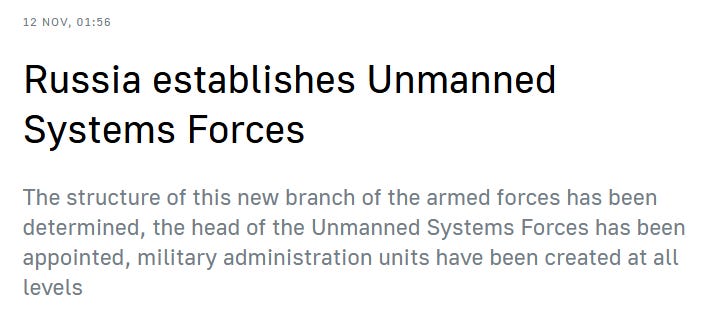
The Unmanned Systems Troops have been created in the Russian Armed Forces, announced the deputy head of the new branch of troops.
The head of the unmanned systems troops has already been appointed, military command bodies have been formed at all levels, and regular regiments, battalions, and other units have been assembled.
Combat operations of UAV units are conducted according to a unified plan and in coordination with other units.
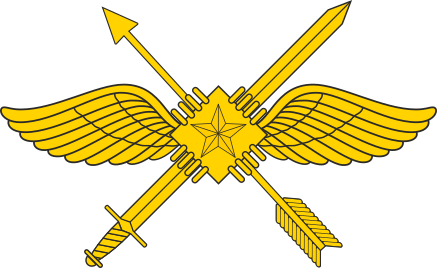
👱♀️The Ministry of Defense showed the emblem of the unmanned systems troops in two videos — crossed arrow and sword with a winged microchip and a star at the intersection.
From the above, pay particular attention to this section, which will become important later: “Combat operations of UAV units are conducted according to a unified plan and in coordination with other units.”
As mentioned, the new emblem has been unveiled, which shows an arrow and sword under a microchip:
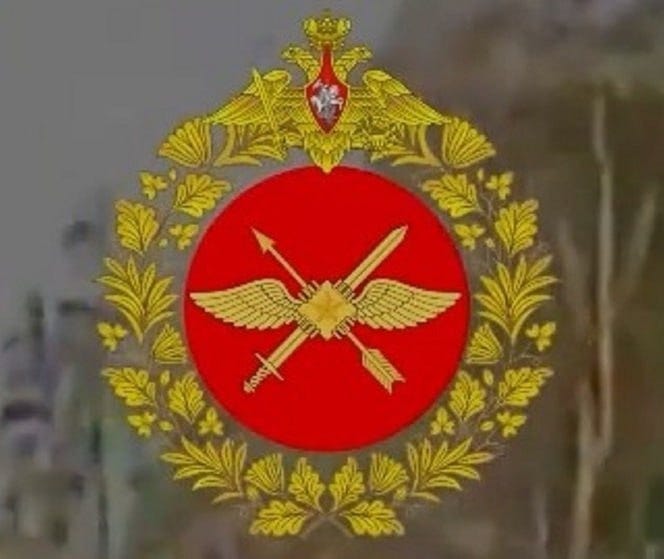
It has garnered some controversy on pro-Russian channels, as they believe the microchip to be a poor design choice and that it should have instead been a symbol from more traditional heraldry.
One analyst notes:
Regarding the emblem of the unmanned systems troops.
The golden double-headed eagle with outstretched wings placed on it (similar to the State Emblem, but with differences in details) symbolizes statehood, unity, and sovereignty. There are no questions here. Nor are there any questions regarding the arrow and sword, which refer to attacking and destroying the enemy. However, the presence of a microchip, in our opinion, looks controversial. It would be appropriate here to place some Christian symbol like Saint George the Victorious (the fight against evil, tyranny, etc.). Or you could take an even simpler path — borrow the heraldry from an already existing structure: the Directorate for the Construction and Development of Unmanned Aerial Vehicle Systems. The latter looks as stately and beautiful as possible, since it also features a scepter — a symbol connecting earth and sky and referring to the fact that drone operators control the sky while working from the ground.
A clearer version:
Before we get to the deeper analysis, another interesting point from the announcement video above is that we get one of our first ever glimpses of the Russian ASTRAS program in use—click the photos below to expand:
It was immediately covered by Ukrainian outlets, noting that ASTRAS is Russia’s equivalent to Ukraine’s long-running DELTA system which I myself covered here with the massive ‘Delta leaks’ that had occurred in 2023.
Virtually nothing is known of it, but most can be assumed and surmised, as the above article does:
ASTRAS, judging by the published images, has an interface similar to civilian messengers. The system probably supports text chats, voice communication, and possibly file sharing.
It is not yet known who exactly developed ASTRAS, but it is likely that we are talking about one of the state or affiliated with the Russian Defense Ministry IT structures.
In short, it is a unified battlefield command and management architecture for integrating various units, commands, C4ISR assets, etc., for the ‘network-centric’ facilitation of carrying out timely OODA loops and kill-chains.
Now recall the earlier: “Combat operations of UAV units are conducted according to a unified plan and in coordination with other units.”
Here is where it all comes together. A recent Ukrainian write-up describes Russia’s major success in utilizing these latest tactics of drone integration during assaults in particular:

War is a constant change where each side tries to create an advantage for themselves. The course of warfare includes a chain of local breaches, where the parties change tactics and get new opportunities. The massive use of drones in combination with the penetration into Ukrainian order has allowed Russians to create an advantage for themselves. The Ukrainian military is resisting, but there are objective obstacles to this, primarily the lack of people in the army.
The Rubicon unit has been discussed a lot and often lately. First because of how the unit uses drones of different types. Rubicon is one of the most effective Russian structures that employs unmanned aircraft and operates the infrastructure around their use. The unit massively uses fiber-optic FPV drones and interceptor drones, and its tactics in enemy troops are being scaled up.
How the enemy works and why he succeeds, we were told on terms of anonymity by a sergeant of the Defense Forces, who is currently working in one of the northern directions.
“The first signs of something new appeared in Kursk, - tells the fighter. - The enemy has dramatically increased and improved the number of FPVs. Russians used drones on optics, and the number of them has doubled. This hit hard on Ukrainian logistics. But it also created a host of other opportunities and formed preconditions for the use of leaking tactics.
Here is the meat of the explanation:
How Russians infiltrate the flanks and back of Ukrainian troops
Infiltration, or seepage, is the penetration of small enemy groups through tiny loopholes between the positions of Ukrainian troops, which arise due to a lack of infantry. Russians find them, enter our flanks and rear, over time there accumulate and begin to act. This is how it happens.
Now the real details begin:
The enemy is carefully scouting the area of interest to him and using all possible unmanned means. At the same time, he studies the logistics routes. Everything that moves on them is also controlled with FPV. “This makes any movement as difficult as possible for the Ukrainian troops: delivery of ammunition, rotation, evacuation,” - tells the military man. In addition, the enemy neutralizes the Ukrainian defenders’ capabilities to counteract: he destroys the Mavic and FPV crews or forces them to withdraw to further positions.
The enemy is also preparing assault groups, establishing communications, working out other preparatory steps. Russians are finding out the distance between Ukrainian positions and observation points, studying the landscape, looking for the most inconspicuous paths to enter the flanks or the rear. When the enemy military moves, they are accompanied by drones, and everything necessary is delivered by night bombers.
The above point is important: night bombers means large hexa- and octocopters, often called Vampire drones or Baba Yagas in frontline parlance. These drones can carry large loads and it is somewhat of a breakthrough piece of info to learn that Russians are simultaneously resupplying their mobile advances with these drones on an ongoing basis; this is particularly the case because the narrative has been that Russia has virtually no large drones of this sort, at least compared to the AFU and its infamous Baba Yagas, which are mostly DJI Matrice 600s and the like.
The report continues with the key statement:
“The most important thing is that all these processes happen in parallel,” says the fighter. Simultaneously, the enemy is working to conduct intelligence, destroy Ukrainian logistics, neutralize drone crews and prepare their military to move. And when the Russians enter our flanks or rear, it allows them to quickly tighten contact with Mavic and FPV crews. So their ability to strike increases.
As stated, the entire integrated process works simultaneously, showing that Russia has achieved a remarkable level of cross-coordination, perhaps with the advent of such systems as ASTRAS, shown earlier, as well as with the unification of drone command under the new branch—which appears to have already been operating in such a way even before the announcement was made.
The other most significant admission here is something which has been widely discussed for months within the Ukrainian military ecosphere—that Russia has vastly scaled up its drone-team-hunting and targeting capabilities.
Ukrainian drone units are now regularly being extincted on many fronts to the point where one common complaint in some directions is now not that there aren’t enough drones, but that there aren’t enough drone operators. Even as of this writing there are new reports from the Pokrovsk direction in this vein:
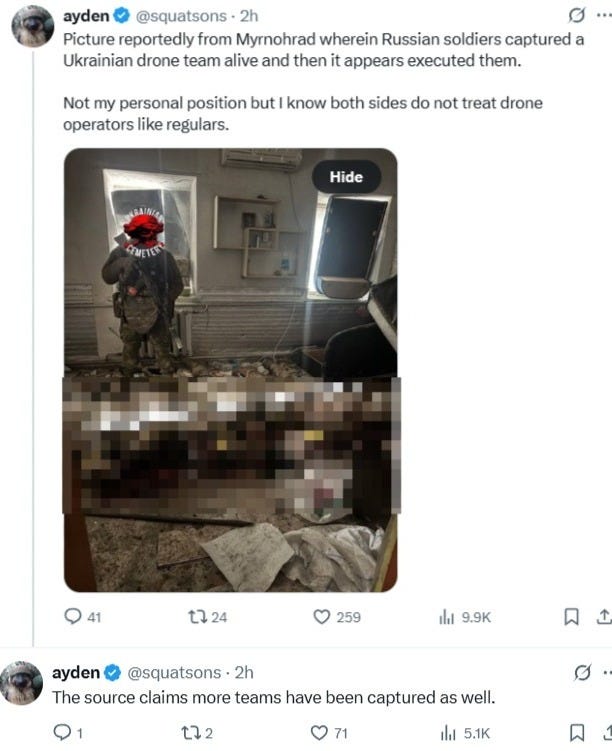
The above personal capture is rare, though. The usual tactic involves Russian triangulations of Ukrainian drone units’ signals to send various pieces of ordnance their way. Other methods include following Ukrainian drones back to their launch point.
The report goes on:
Why does this tactic work?
Of course, the Ukrainian army understands the tactics of the Russians and could counteract it. But does not have the opportunity to do so - she lacks people, and this problem affects priorities.
To prevent the Russians from infiltrating our flanks and backs, a solid line of defense is needed. It cannot be built due to lack of personnel. Infiltration is a long-known tactic, it is not an invention of the Russians. But the enemy combined it with drone capabilities, and it became his primary force. To counter them, the Ukrainian army also needs people. But our main resource is involved in the work we do: the military is destroying enemy groups that are already trying to come between our positions.
The need to extinguish local fires deprives Ukrainian defenders of the ability to work on advancement and destroy conditions under which the enemy could carry out its tactics. This makes the job of defenders a lot. To get away from this, the Ukrainian army must change priorities. “We have to be flexible,” says the defender. - We have to change to respond to the needs that exist today, and the best thing is to anticipate them and prepare in advance. Only in this way we can preserve more of the basic resource that exists and will remain the most precious and most important - our people”.
If you are interested in learning more about Rubicon - write in the comments. If you are military and have something to add, send us a personal message.
As corollary to the above, here’s a recent Ukrainian report from the Sumy direction—read how perfectly it corresponds to the tactics outlined above:

Here’s how one ‘defense analyst’ summarized the earlier report on Russian tactics, with an obligatory Roepcke reaction added for effect, as well:

This is a pretty devastating admission; granted, Ukrainian ‘infantry’ at this point does little more than sit in trenches and dugouts as fodder, providing forward observation posts for drone units, and it is the logistics troops that actually expose themselves daily pushing relays back and forth from the front to the rear. Either way though, it is a pretty big admission, particularly the fact that Russia has really concentrated on attriting Ukraine’s direct operational rear.
Examples from a month or so ago:
Su-34 launches an airstrike on the point of operation of UAVs of the Armed Forces of Ukraine with an Kh-35 missile
According to Source, preliminary losses are:
Mobile UAV launch vehicle – 1
Antenna-mast systems – 3
Kiev forces UAV specialists – ~7
Another:
The footage shows an OTRK Iskander missile strike (with a cluster warhead) hitting the launch site and positions of long-range drone operators of the Kiev forces near the settlement of Krolevets, Sumy region.
Preliminary strike results:
Mobile UAV launch vehicles – 2
Control antennas – 3
UAV launchers – 2
Kamikaze drones – ~15
Kiev forces drone operators – ~10
And another:
Destruction of “Baba Yaga”, UAV crews and a minibus of the Armed Forces of Ukraine in Konstantinovka
The Berkut group of the reconnaissance and strike division of the 238th Guards Artillery Brigade of the 8th Guards Combined Arms Army conducted an operation in the area of the settlement of Konstantinovka. With the help of UAVs, Baba Yaga-type copters, UAV crews and minibuses of the Armed Forces of Ukraine used to transport equipment and personnel of the enemy were detected. The targets were destroyed and disabled by precise strikes of the Lancet X-51 loitering munition. The operation deprived the enemy of the ability to conduct aerial reconnaissance and strikes, and also undermined its logistics, demonstrating the high precision and coherence of the Berkut group.
One Ukrainian military post outlines precisely how Russia’s best drone unit manages these exploits:
Information about the enemy.
It’s no secret that the enemy’s actions in knocking out our logistics channels with drones played a key role in our retreat in the Kursk direction.
The enemy did this actively and accurately. Almost all of this work was carried out by the crews of the Rubicon unit.
The Center for Advanced Unmanned Technologies “Rubicon” was created in the summer of 2024, but information about it first appeared in October 2024. The center operates under the personal supervision of the Minister of Defense of the Russian Federation and has a high priority in supplying and staffing the center with selected personnel.
The center has the following structure:
-Center for the development of unmanned systems and robotic ground complexes
-Instructor Training Center for training military personnel in the use of innovative unmanned solutions
-Analytical Center
- Combat units.
Combat units operate with all types of UAVs:
-Striking UAVs of the Lancet and Molniya types
-Anti-aircraft drones
-Drones on fiber optics
-Long-range FPV drones
-Separate specially trained groups are working against our bombers.
After the Kursk operation, some of the Rubicon crews remain in the Sumy direction. They are now attacking our rear areas to a depth of 20-30 km.
And some of the crews were transferred to the east. According to my information, there are more than 30 crews.
They work from Velyka Novoselka to Chasiv Yaru.
They often use the tactic of flying multiple drones at the same time to target a single target. They operate over long distances via repeaters.
The attacks on the Kramatorsk-Dobropillya, Pokrovske-Iskra, and Pokrovske-Petropavlivka roads are the work of their hands.
All enemy front-line reconnaissance is required to carry out the tasks of the Rubicon groups. They primarily “like” to work with FPV video in the 3-4 GHz range, and control in 2.1-2.7 GHz, 300-380 MHz, and 500-525 MHz.
On the OSD menu they are identified as RUBK, but most often Rubicon does not want to give itself away and flies as VT40.TT , FIRE, ACTA NON VERBA, SUDNY_DEN, VT40.GLADIATOR
The selection process for the unit is very strict.
We will leave off the report with a couple newer items about the advancements in Russian drones themselves, rather than the tactics.
First, we’ve recently had our first look at Russia’s new all AI-powered drone, the V2U:
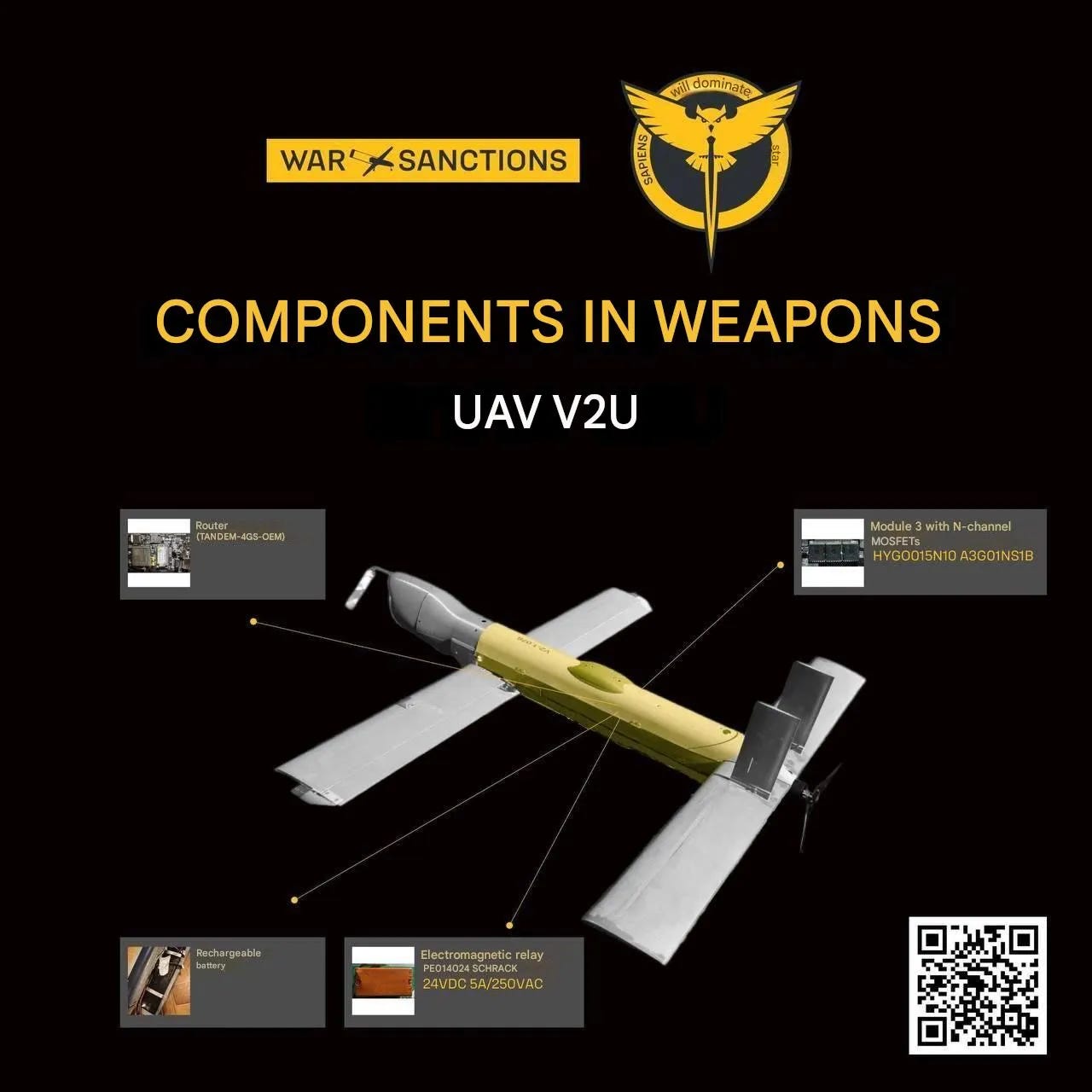
According to the Ukrainian side, the peculiarity of the V2U AI is that the drone uses an autonomous guidance system based on a neural network algorithm. This allows it to independently select targets without external control. The key effect is a decrease in vulnerability to electronic warfare: the drone does not require constant communication with the operator and therefore does not respond to signal suppression, like standard FPV or copters.
Ammunition - cumulative or fragmentation warhead weighing up to 3.5 kg. The accuracy of hits and the nature of work in low visibility conditions are separately noted, which indicates the use of optical and thermal imaging sensors in conjunction with the recognition algorithm.
If such drones are really supplied to the troops in series, then we are talking about a change in the logic of using UAVs - from an operator-controlled munition to an autonomous combat element.
It was even captured on video by a Ukrainian interceptor drone
More information:
🇷🇺⚔️🇺🇦 Russia Deploys New AI-Equipped Kamikaze Drone in Sumy Sector, According to Ukrainian Sources
According to Ukraine’s military intelligence (GUR), Russia has developed and deployed a new strike drone powered by artificial intelligence, designated V2U. The drone reportedly has the ability to autonomously search for and select targets without human input.
Ukrainian sources claim the V2U is already being used on the Sumy front, where Russian forces continue to advance.
The drone is said to be equipped with a Chinese Leetop A203 mini-computer, based on the NVIDIA Jetson Orin AI platform. Most of the other internal components are also reportedly sourced from China.
Ukrainian reports further allege that the drone uses onboard visual data comparison—matching live footage to preloaded imagery of terrain—and can also be manually controlled in FPV mode via a SIM card from a Ukrainian mobile network.
Additionally, Ukrainian analyst Yuriy Romanenko also recently spoke of a new autonomous Russian Geran variant driven by AI, which hunts down Ukrainian AD systems:
🇷🇺🛸💥🇺🇦 Russia Deploys AI-Guided Geran Drones That Hunt Down Ukrainian Air Defense Teams
Russia is now fielding upgraded Geran drones equipped with artificial intelligence and machine vision, capable of identifying and targeting Ukrainian mobile air defense units.
According to Ukrainian political analyst Yuriy Romanenko—citing a soldier from a frontline unit that intercepts drones—these AI-driven drones operate with a new tactical role.
They enter contested airspace first, flying in search patterns to draw fire and detect Ukrainian positions. Once enemy anti-air teams open fire, the drone pinpoints their location and dives in to destroy them.
And Russia is not alone in these developments:
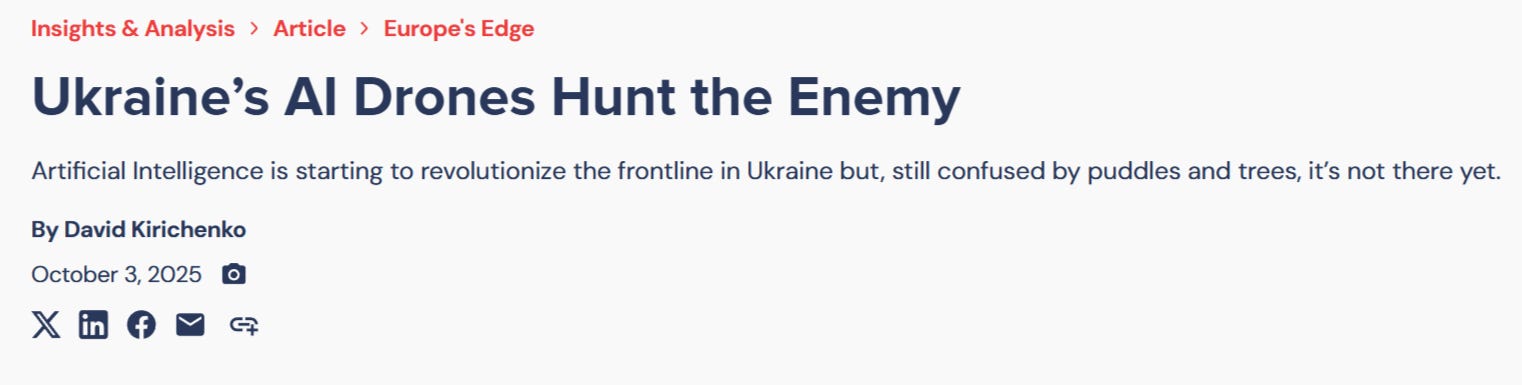
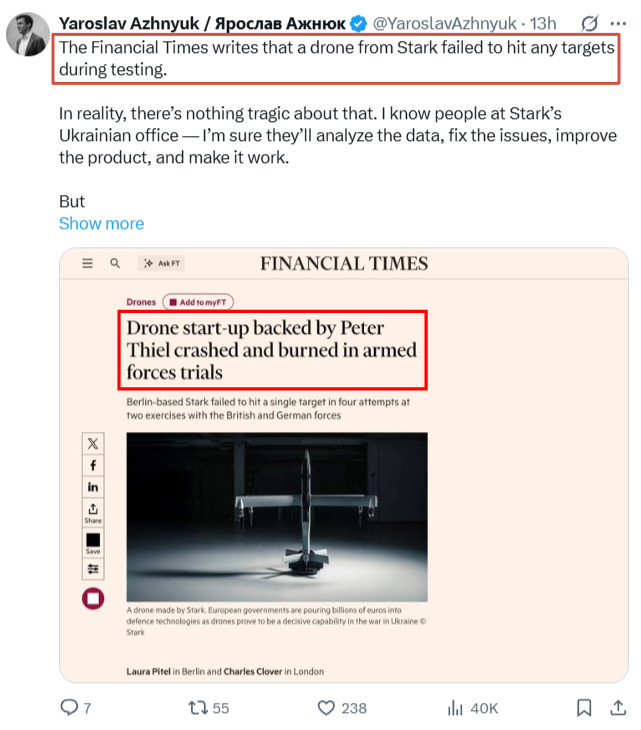
Meanwhile, here’s how the US and West’s best innovators are stacking up:
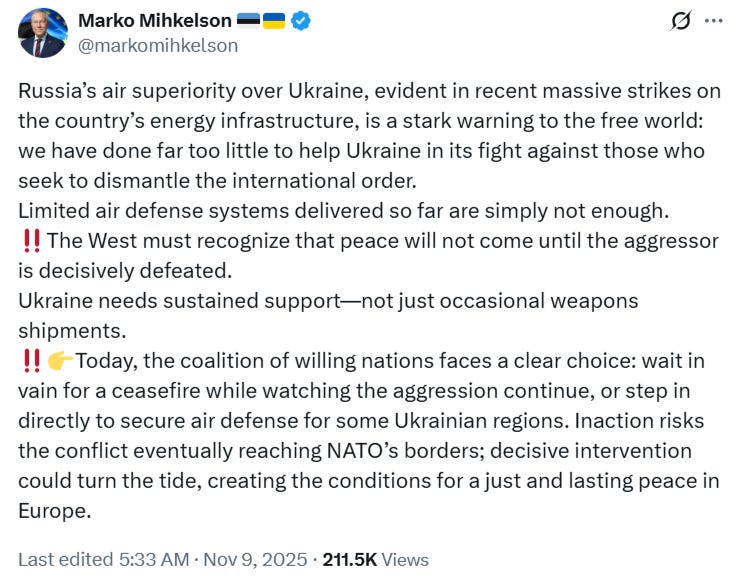
As a last note, many analysts on the pro-UA side—and even Ukrainian troops—have for a while now been noting Russia’s increasing drone dominance. Suddenly, there is talk of a Russian ‘air superiority’ over Ukraine:
But more notably, analysts are admitting Russia is exceeding Ukraine in its drone usage particularly on the operational scale. Here the OSINT lead for ISW states that Russia has mastered isolating the battlefield via drone-facilitated battlefield air interdictiontactics:
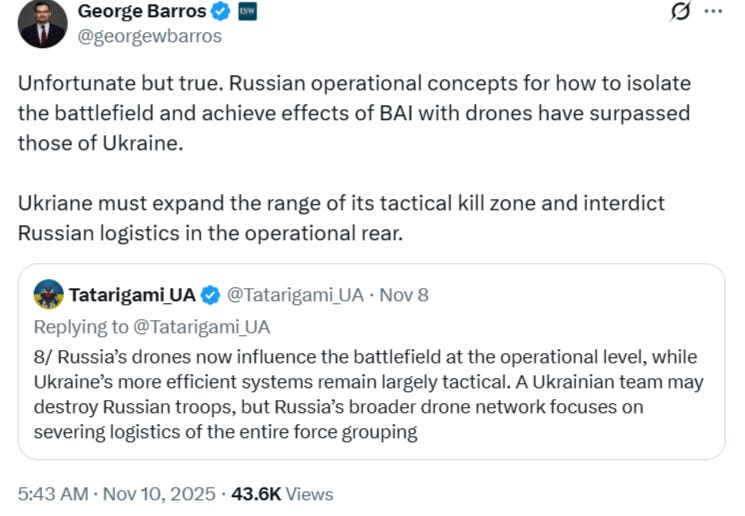
What Tatarigami was noting below was that, in his opinion, Ukraine still specializes in short range tactical drone operations with FPVs, while Russia has mastered the art of interdicting the entire logistics chain down through the operational. Mainly this has come by way of much greater battlefield ISR and wider range of drone varieties for the tasks. The entire Pokrovsk-Mirnograd agglomerate encirclement has happene—as we recently wrote about—precisely because Russia was able to isolate Ukraine’s deeper logistics routes via this very method, at least according to the Ukrainians themselves.
It’s clear that now with the advent of Russia’s new Unmanned Systems Forces as a legitimate branch of the Armed Forces, things are only going to scale even more drastically in this direction. Actions will become even more unified as Russian drone forces continuously improve, while Ukrainian drone teams will face harsher and harsher attrition rates which will ultimately widen the gap between the two sides’ drone capabilities.
But it will be interesting to see in practice how much noticeable change Russia’s new drone branch brings to the battlefield; until then, we’ll be watching.